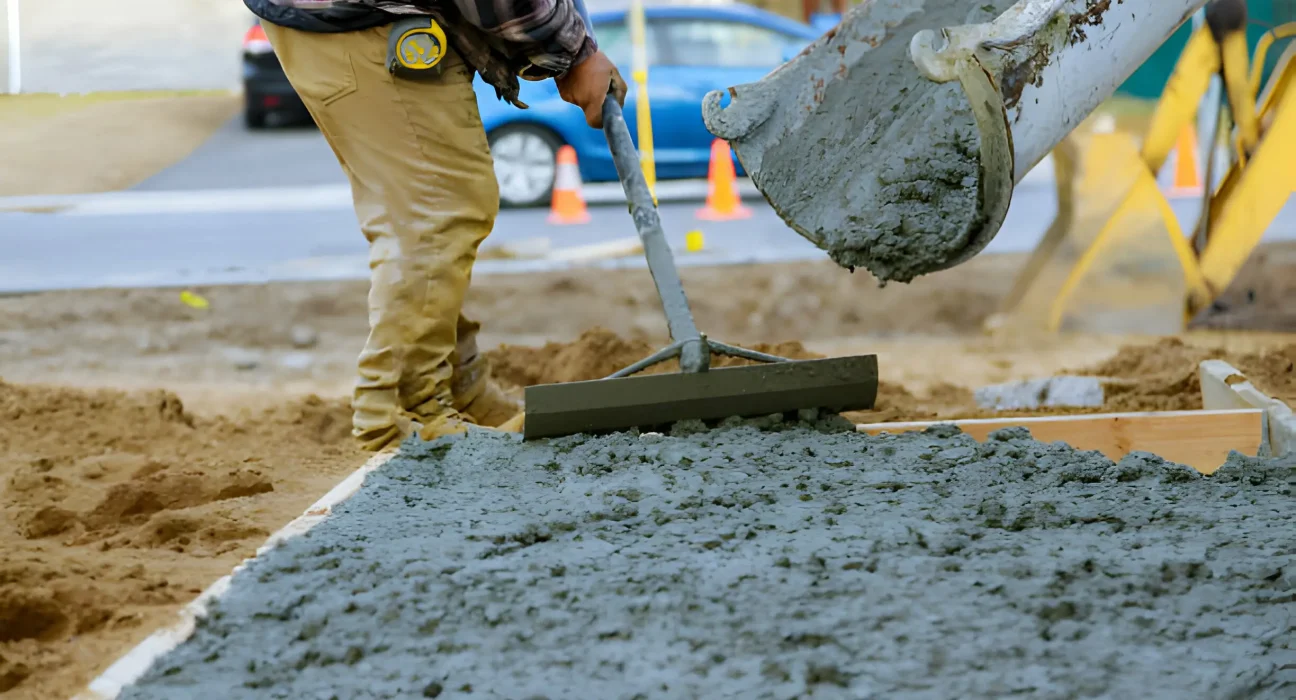
Backyard projects have a habit of looking manageable right up until the work actually starts. A slab pour that seems like a weekend job involves soil conditions, drainage slopes, mix design, curing windows, and finishing timing that professionals spend years getting right through repetition. When a concrete patio contractor handles every phase, what separates them from a self-managed effort becomes evident well before the first winter cycle.
Expertise changes outcomes
Concrete doesn’t forgive mistakes the way other materials do. Once it sets, what’s there is what stays. Surface cracking from improper curing, settling from a poorly prepared base, drainage pooling toward the foundation instead of away from it; these aren’t hypothetical risks. They’re the predictable results of work done without the technical background the job actually requires.
Professional contractors bring knowledge that changes what the finished slab is capable of delivering:
- Soil assessment identifying ground conditions requiring extra sub-base depth before any concrete arrives
- Mix design matched to the local climate and the freeze-thaw pattern the slab will face through winter
- Reinforcement positioned according to the load the patio will realistically carry over decades
- Slope precision calibrated so water routes consistently away from the foundation
- Curing management protecting the surface integrity through the critical first week after the pour
Miss any one of those elements and the consequences show up gradually. They also cost considerably more to address after the fact than professional installation would have run at the start.
Tools and equipment access
- The equipment list for a proper patio installation isn’t what most homeowners have sitting in the garage. Plate compactors, concrete vibrators, bull floats, power screeds, and finishing tools each serve a specific function at a specific stage of the work. Rental yards stock some of these. Getting the right configuration for a residential patio scope isn’t always straightforward.
- Contractors arrive with the full complement already sorted. That matters beyond simple convenience. Using the correct tool at the right moment in the process directly influences structural results. A slab that doesn’t get properly vibrated traps air pockets that become weak points under load. A surface finished at the wrong stage develops texture problems that don’t announce themselves immediately but become more apparent every season the patio sees regular use.
Time and cost realities
- First-time DIY estimates have a reliable tendency to undercount what the project actually requires. Materials, equipment rental that extends when things take longer than expected, disposal costs, and time investment all cost more than the initial estimate once the job is running. Errors that need correction before the pour sets add both material cost and stress that no project budget accounts for accurately in advance.
- Professional installation front-loads the cost cleanly and removes the hidden expenses that accumulate across a self-managed project. One price, one crew, one schedule, no second trips to the hardware store for materials that ran short because the sub-base prep took more fill than the initial calculation suggested.
Warranty and Accountability
A contractor who installs your patio stands behind what they built. If cracking develops inside the warranty period, there’s a defined process for getting it addressed. If drainage underperforms relative to what was specified, the contractor comes back. That accountability is built into the professional relationship from the contract forward. DIY work carries none of that backstop. Every problem becomes the homeowner’s problem to identify, price out, and fix. This accountability gap represents the strongest practical argument for professional installation.